
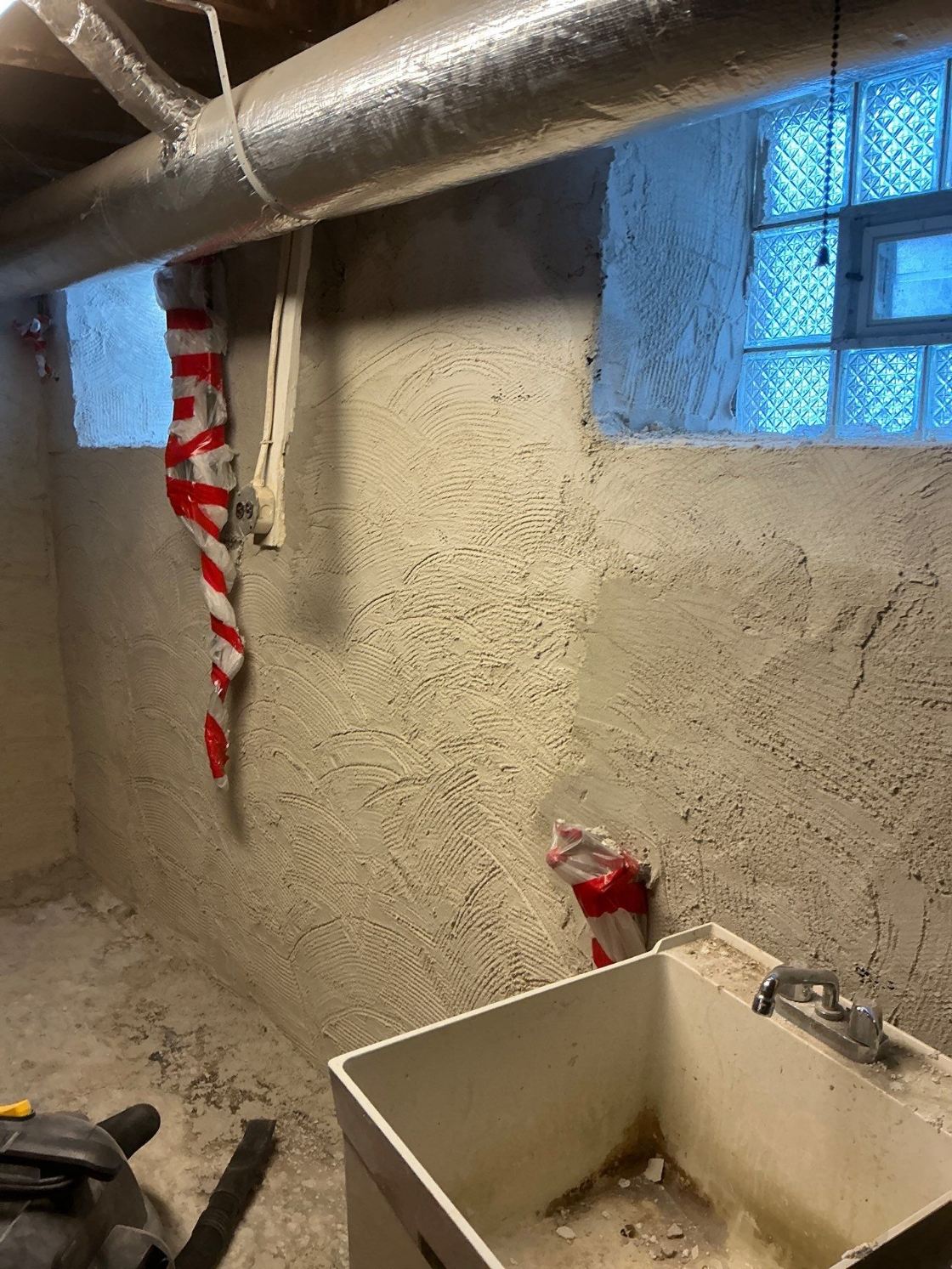
Parging concrete basement walls holds up when you do three things in order: stop any water coming through the wall, strip the wall back to solid masonry, and then apply the right mix in thin coats that cure slowly. Skip a step and the new coat can crack, bubble, or flake off within a few seasons. Below are the tips we follow at BJK Masonry & Restoration, plus the signs that a wall needs more than a fresh coat.
What Is Parging?
Parging is a thin coat of mortar troweled over a masonry wall. In a basement, it goes over concrete block, poured concrete, or old stone and gives you a sound, even surface that’s easier to keep clean. Plenty of basements around Havertown and the Main Line already have it. It’s the gray or whitewashed coat on the foundation walls that tends to flake near the floor and under the windows as it ages.
One thing to know up front: parging is a surface coat, not waterproofing. It can make a tired wall look and wear better, but it won’t stop water that’s pushing through from outside.
7 Tips for Parging Concrete Basement Walls
1. Deal with the water first
If water is actively coming through a wall, parging over it won’t last. Moisture behind the wall pushes the new coat off, and you’re back to the same flaking you started with. Watch for damp patches after rain, water along the floor line, or white, powdery deposits on the wall. Those are signs the water needs a fix first, such as basement waterproofing with an interior French drain and sump system.
2. Know what’s under the old coat
Concrete block and newer poured walls can usually take a standard cement-based parge. Older stone and brick foundations are a different story. Much of Havertown was built in the first half of the 20th century, and many older homes here have stone foundations laid in soft lime mortar. A hard cement coat over that kind of wall can trap moisture and speed up the damage. That’s why we prepare breathable, lime-based mixes in-house for older walls. If you’re not sure what your wall is made of, look where the old coat has already fallen away.
3. Remove everything that’s loose
New parging only holds as well as the surface under it. Flaking paint, crumbling old parge, and dust all have to come off until you reach solid material. Tap the wall with the handle of a hammer. A hollow sound usually means the old coat has let go and needs to come off too.
Before you scrape, think about your home’s age. Homes built before 1978 may have lead-based paint, and scraping or sanding it can create hazardous dust. Many basement walls in older Main Line homes have been painted more than once.
4. Repair before you cover
Open mortar joints, holes, and loose stones should be repointed or repaired before any coat goes on. Parging hides problems. It doesn’t fix them. Where the joints in a stone foundation have washed out, foundation repair and repointing comes first so the parge bonds to solid masonry.
5. Only parge over old parging if it’s sound
If the existing coat is hard, well bonded, and doesn’t sound hollow, you can sometimes go right over it. A bonding agent is often used. If it’s soft or hollow in spots, those areas come off first.
6. Build it up in thin coats
One heavy coat is more likely to crack as it dries. Parging goes on in proper coats, with each one given time to set before the next.
7. Let it cure slowly
Parging that dries too fast is prone to cracking, especially on older lime walls. Slow, even curing is part of the job, not an afterthought, so plan the work for a time when the basement can be left alone while it sets.
Why Basement Parging Cracks or Flakes
When we’re called to look at a failed coat, it usually comes down to one or more of these:
- Water pressure building up behind the wall
- Coats that were too thick or dried too fast
- A poor bond because loose material or dust was left on the wall
- Movement in the foundation
- Hard cement parging over soft, older masonry
White, powdery efflorescence, delamination (the coat separating from the wall in sheets), and crumbling are the most common signs. Most of them trace back to moisture or skipped prep. If a wall is bowing or settling, that’s a different issue, and it may need a structural evaluation before any masonry work.
What a Real Basement Parging Job Looks Like
Photos from a recent BJK basement project show what we often walk into. The old whitewashed coating was stained along the walls and had broken away below a window, leaving the original stone exposed.
On jobs like this, the loose material comes off, damaged areas are repaired, and the new parge goes on in coats. In the finished photos, the foundation walls have a fresh, even coat worked in around the windows, pipes, and electrical lines, with the wiring wrapped to keep it clean during the work. When the prep, the mix, and the moisture are handled right, basement parging can last 15 to 30 years.
Homeowners notice the difference. After BJK restored the basement walls in his century-old home, along with repointing, crack repairs, and a refinished concrete floor, Connor H. wrote in his Google review: “All the work looks fantastic, and our home feels structurally secure and more us than ever!”
Can You Parge a Basement Wall Yourself?
A small, sound area on a block or concrete wall can be a reasonable DIY project. The hard part isn’t the troweling. It’s the prep and the mix. A poor bond often means the whole patch has to be redone, and on an older stone or brick foundation, the wrong mortar can do real harm to the wall over time.
What Does Parging Cost?
Pricing depends on the size of the wall, its condition, and how much repair it needs before the coat goes on. Our basement wall parging page covers the published cost ranges we reference. BJK projects start at $450, and we give a project-specific price after a free on-site estimate.
When to Call a Pro
Call a mason if you see any of these:
- Water coming through the wall or collecting at the floor line
- An older stone or brick foundation with soft, crumbling mortar
- Large hollow or flaking areas, loose stones, or open joints
- Cracks that keep coming back after a patch
- Painted walls in a home built before 1978
BJK Masonry & Restoration is a family-owned masonry company based in Havertown. Owner Brendan Kneafsey is a second-generation stone mason, a graduate of Williamson College of the Trades, and certified in historic masonry preservation, including lime mortar. He takes part in estimates and oversees the work, and small repairs are welcome. Parging is interior work, so winter is a good time to get your basement on the calendar.
Call 610-585-8410 or request a free estimate for your basement walls in Havertown, Wynnewood, Ardmore, or nearby Main Line towns.